By Hamad Rashid.
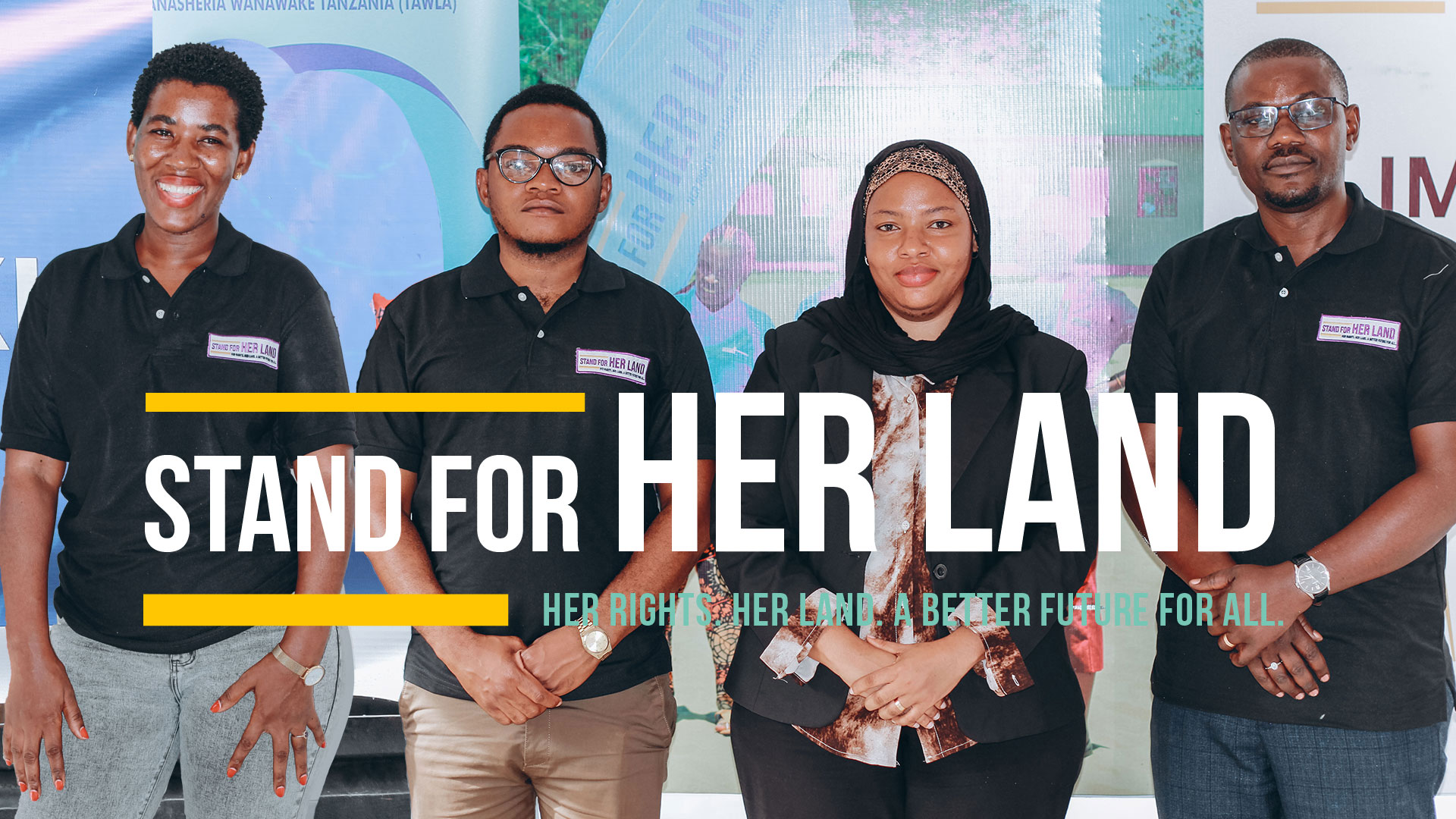
Women from Dar es Salaam and other regions of Tanzania gathered at the Samia Land Clinic, an initiative led by the Ministry of Lands, Housing and Human Settlements Development to bring land services closer to citizens. Among the key actors collaborated with the Ministry were members of the Stand for Her Land Campaign, who used the opportunity to provide legal education, guidance, and support to women seeking to understand and protect their land rights.
At the campaign’s booth, women arrived in looking for information about land ownership, inheritance rights, and procedures for obtaining title deeds.
Members of the Stand for Her Land campaign served more than 300 people, while 73 cases involving women were attended.
The Role of the Stand for Her Land Campaign
The Stand for Her Land Campaign is a global initiative advocating for women’s land rights. In Tanzania, the campaign brings together more than 38 organizations working on land governance, legal empowerment, and gender equality.
Organizations such as Landesa, HakiArdhi, Sheria Kiganjani, and the Tanzania Women Lawyers Association were among those participating in the Samia Land Clinic to provide legal support and information to women.
Importantly, the clinic also attracted men who support women’s land rights while addressing their own land-related concerns. Hamisi Karimu, a young man from Kinondoni District, praised the initiative after successfully resolving his land issue.
“I am very happy,” he said. “I came here to follow up on my land matters, completed the required procedures, and succeeded. I would like to thank the leadership present and the team working here.”
The clinic became an important space for women who often face social and legal barriers when claiming land. Through direct consultations and legal awareness sessions, campaign members helped many participants better understand their rights and the steps needed to secure their land.
“I sincerely thank the Stand for Her Land Campaign,” said Matrida Ngomango from Ifakara in Morogoro Region, who visited the booth seeking legal advice. “I truly appreciate their support and encourage them to continue providing education without losing hope”
For Anjela Ngoda, a widowed mother from Kigamboni in Dar es Salaam, the clinic provided reassurance and renewed confidence. “Honestly, I feel encouraged to realize that even I, as a widowed mother, deserve the same consideration and rights,” she said.
Another participant, Felister Kaijunga from Mbezi Luis in Dar es Salaam, said the education she received significantly changed her understanding of land ownership. “I sincerely thank the Stand for Her Land, you have helped me a lot by providing education and opening my understanding” Felister.
Previously I had no knowledge about land matters, but now I understand the value of women in land ownership and how to protect land whether I live in town or in the village,” she explained.
According to data from the National Bureau of Statistics published in 2022, only about 28 percent of women in Tanzania legally own land, while the figure reflects some progress, it also highlights the persistent gap in achieving equal land ownership. Legal experts and land rights advocates emphasize that continuous education remains one of the most effective ways to bridge this gap.
Advocate Mwanaidi Msangi from the Tanzania Women Lawyers Association (TAWLA) noted that initiatives such as the Samia Land Clinic play a vital role in expanding access to land rights education. “The number of women owning land will increase as we continue providing education,” she said. “When clinics like this are organized in different areas, they encourage participation and allow information to spread further.”
Msangi added that many women attended the clinic seeking guidance not only on land issues but also on broader legal matters. “many women came and we served them. Some had land-related questions while others needed wider legal education, and we were able to assist them,” she said.
Advocate Charles Ndaki from HakiArdhi said, the clinic demonstrated how outreach initiatives can connect essential services with communities that might otherwise struggle to access them.
“This has been a very useful clinic,” he explained. “Many of the issues raised involve transferring land ownership, obtaining title deeds, and inheritance matters, particularly the different challenges women face when inheriting property including land.”
Lessons the S4HL Members Are taking from the Clinic
The experience also revealed the growing demand for accessible legal services in the land sector. According to Ndaki, even as the clinic sessions were nearing closure, community members continued arriving for assistance.
“The main lesson I am leaving with is the level of need in the community,” he said. “Even as we are closing, people are still coming for help. That shows how important these services are.”
Stakeholders believe the impact of such initiatives could grow even further if outreach expands beyond urban centers. Msangi emphasized the importance of extending legal education to rural communities where access to information remains limited.
“As stakeholders providing legal education, we should not stop here,” she said. “We need to reach villages and communities where access to information is still a challenge. Clinics like this should not remain only in towns.”
Patriarchy Systems and Women’s Land Rights
Women pointed to patriarchy as a barrier to their land rights. Many participants at the clinic reflected on long-standing cultural and social practices that have historically limited women’s access to land ownership.
“In the past our society was largely patriarchal,” said Matrida Ngomango. “Men and male children were given more consideration when it came to property ownership. For girls and women it was difficult, but through education we are beginning to understand that we also have rights.”
Translating Land Policies and Laws into Practice
Efforts by the Stand for Her Land Campaign also reflect Tanzania’s broader policy and legal commitments to gender equality in land ownership. The National Land Policy emphasizes that women have the same rights as men to access, own, and use land.
These commitments are further supported by the Land Act, 1999 and the Village Land Act, 1999 which recognize equal rights for men and women in land ownership, transfer, and inheritance. By providing legal education and practical guidance, initiatives like the Stand for Her Land Campaign help translate these policies and laws into real understanding within communities and enable women to claim the rights already guaranteed to them under Tanzanian law.
A Call for Continued Collaboration
The experiences shared during the Samia Land Clinic highlight both the progress made and the work that still lies ahead in ensuring equitable land ownership in Tanzania, expanding legal education, strengthening collaboration, and bringing services closer to communities remain essential steps toward securing women’s land rights across the country.