By Hamad Rashid
The Union of Tanzania Press Clubs (UTPC) is championing a transformative model of community-centered journalism in Tanzania one that recognizes citizens not merely as subjects of news, but as agenda setters in national discourse.
Through its capacity-building project aimed at equipping journalists with the skills to produce accurate, impactful, and public-interest stories, UTPC convened diverse community groups in Geita Region alongside media practitioners. The goal was clear: identify priority issues directly affecting citizens and ensure they are reported professionally, ethically, and responsibly.
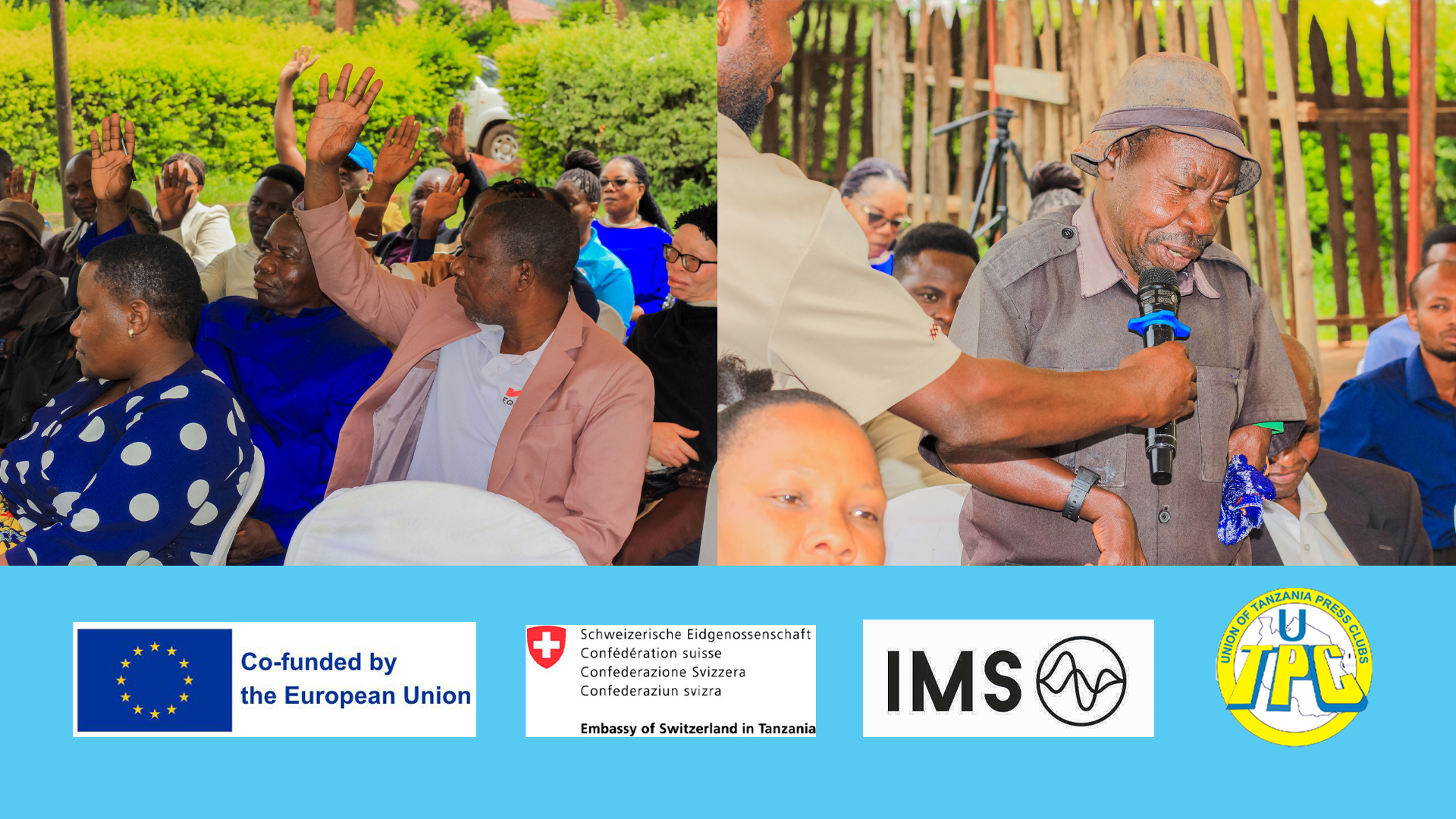
Opening the engagement session that brought together 45 participants, UTPC Director Kenneth Simbaya emphasized that communities hold a wealth of untapped information information that requires professional journalism to translate it into actionable accountability.
“Communities possess critical information that needs a bridge to reach decision-makers. Journalists are that bridge,” Simbaya noted.
He stressed that professional journalism begins with listening gathering verified information from citizens, processing it ethically and accurately, and presenting it in ways that compel institutional response. In this sense, journalism becomes more than reporting; it becomes a catalyst for transparency and governance reform.

Kenneth Simbaya, Director of The Union of Tanzania Press Clubs (UTPC), during the engagement.
Public-Interest Journalism Must Start with Communities
Facilitating the training session, Dastan Kamanzi, Executive Director of Tanzania Media Foundation, reinforced the principle that impactful journalism is rooted in community realities.
“We train journalists to derive story ideas directly from citizens rather than constructing narratives in isolation. When journalists prioritize community voices, they amplify them meaningfully,” Kamanzi explained.
By 2025, UTPC has begun training journalists nationwide through the PIJ/IJ Fellowship Program, an initiative designed to nurture reporters capable of producing high-quality public-interest journalism.
This initiative responds to a broader national need strengthening journalism as a development tool, particularly in underserved and marginalized regions where community voices often struggle to reach policy platforms.
Strategic Partnership with International Media Support (IMS)
The project is supported by International Media Support (IMS), an international organization dedicated to strengthening media systems globally, with funding from the European Union and Embassy of Switzerland in Tanzania
Speaking during the Geita engagement, IMS Tanzania Program Officer Joyness Byarugaba reaffirmed the organization’s commitment to empowering media ecosystems.
“IMS works to strengthen media institutions and journalists to produce accurate, impactful reporting that benefits society. Through this project, we aim to contribute to a more informed and engaged Tanzanian public,” she said.
Headquartered in Denmark and operating in over 30 countries, IMS has been active in Tanzania since 2020, supporting media safety, professionalism, and institutional development.
Community Priorities Brought to the Forefront
During group discussions, journalists engaged directly with farmers, pastoralists, small-scale miners, entrepreneurs, small-scale traders, people with disabilities, and representatives from civil society organizations working closely with communities in Geita. The sessions created space for candid dialogue and shared reflection.
Journalist Gharos Riwa, who participated in discussions with entrepreneurs, highlighted a recurring concern repeated and unstructured relocations of small businesses.
“Frequent relocations have destabilized businesses, reduced customer flow, eroded capital, and even affected mental well-being. Some families are now economically vulnerable as a result,” Riwa shared.
Training participants engaged in group discussions.
Additional concerns raised included, Delayed access to agricultural inputs due to distant distribution centers, high levies imposed on small-scale miners, and alleged evictions from mining sites
The growing number of street-connected children
Participants emphasized that these issues require in-depth, evidence-based reporting capable of prompting meaningful government response.
Florentina Simoni, a small-scale trader from Mbagala Market in Geita Town, urged journalists to become part of the solution by consistently highlighting entrepreneurs’ realities. Similarly, Mahizo Kibule, a small-scale miner at Magema Mine, called on journalists to visit mining sites directly to document on-the-ground challenges affecting miners.
The community seminar also brought together journalists participating in the fellowship program, enabling them to gather new story ideas while deepening their understanding of community concerns. Using the skills acquired through the fellowship, they are expected to develop impactful story series grounded in evidence and citizen voices.
Journalism as a Bridge for Accountability and Development
UTPC’s nationwide initiative continues to expand to other regions, with the next phase of community seminars already underway.
Beyond reporting events, the project reinforces a critical message to development actors: public-interest journalism is democratic infrastructure. It is the bridge between citizens and institutions facilitating transparency, strengthening participation, and enabling responsive governance.
In connecting communities with media practitioners, UTPC is not only building journalistic capacity; it is strengthening the foundations of accountability and inclusive development in Tanzania.
Training participants listening to Dastan Kamanzi during his presentation.