- By Hamad Rashid Hassan – The Loyal Media and
- Ahmada Bakari Haji – Milele Zanzibar Foundation
Despite education reforms in Zanzibar, many students especially girls still lack sufficient access to practical STEAM learning, modern laboratory tools, and innovation-based training needed to solve real-life problems. Teaching has largely remained theoretical, limiting students’ creativity and problem-solving skills required under the Competence Based Curriculum (CBC). Meanwhile, communities continue to face challenges such as schistosomiasis and limited engagement in the Blue Economy, showing the need for more hands-on, technology-driven learning to prepare students for future opportunities.
Milele Zanzibar Foundation, through its project “Acceleration for Innovative Quality Learning in Zanzibar” funded by Dubai Cares, has successfully implemented STEAM Bootcamps in Unguja and Pemba aimed at transforming education and inspiring students especially girls to pursue Science, Technology, Engineering, Arts, and Mathematics (STEAM).
Eshe Ramadhani from Milele Zanzibar Foundation explained that the Bootcamp initiative focuses on equipping students with practical STEAM skills, encouraging innovation and problem-solving within their communities.
“Science is not only theory; it is practical. This project began by strengthening teachers’ capacities to deliver hands-on learning, and now these Bootcamps are giving students opportunities to become innovators and community problem-solvers,” said Eshe.
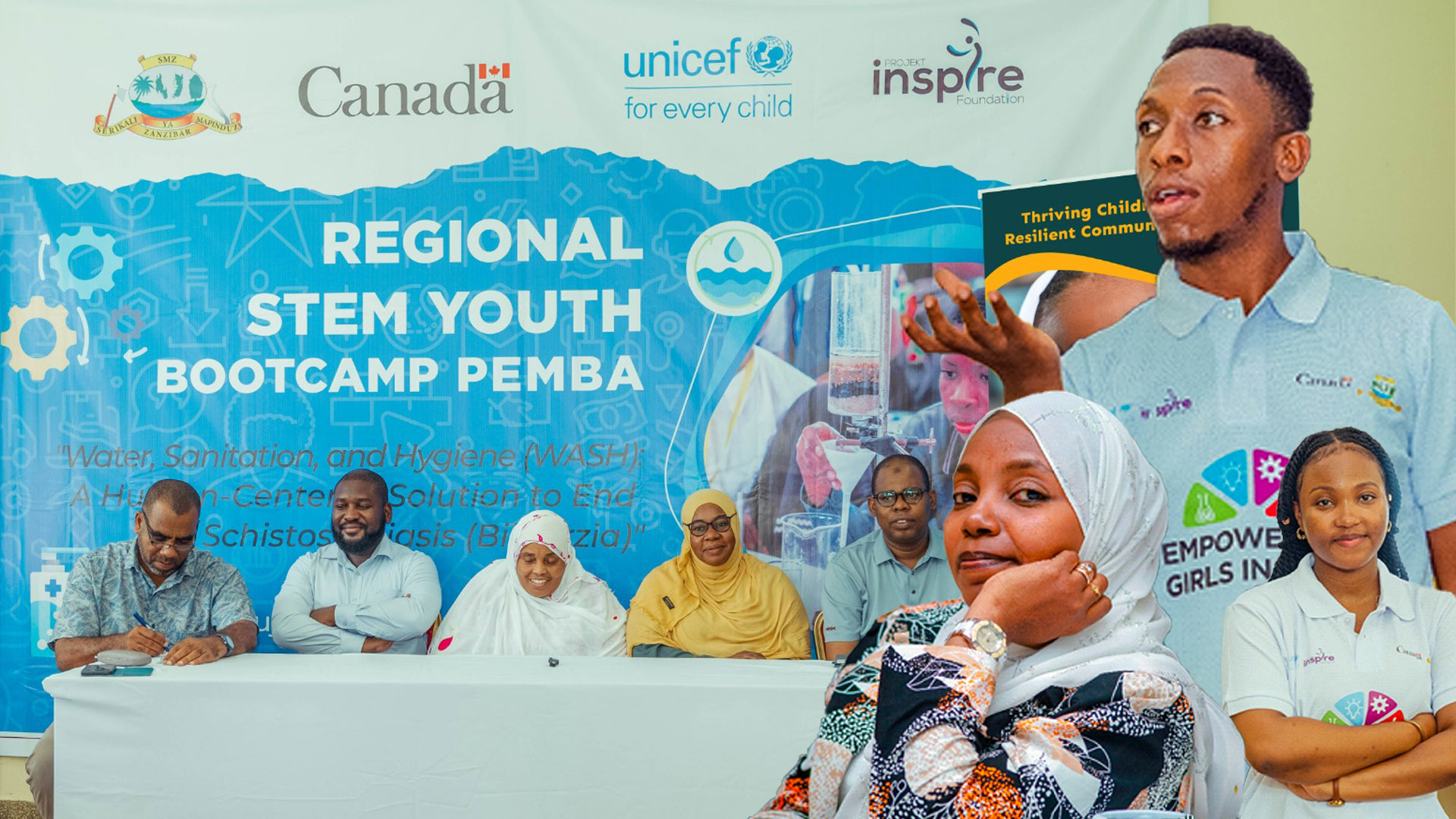
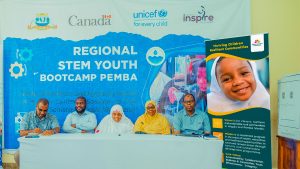
In Pemba, the Bootcamp focused on WASH (Water, Sanitation and Hygiene) and public health, particularly schistosomiasis awareness and prevention. Students learned about the parasites that cause the disease a persistent health challenge in many communities and explored ways to combat it using modern scientific approaches, while in Unguja Bootcamp held at STEM Hub Jang’ombe Zanzibar the theme was Unlocking the Blue Economy Value Chain through Seaweed Innovaton
“During laboratory sessions, students were introduced to AI-powered microscopes. This technology simplifies and speeds up the process of identifying and counting schistosomiasis parasite eggs with greater accuracy compared to conventional microscopes,” Eshe added.
“Practical learning enables students to retain knowledge for a longer time and develop a deeper understanding of what they are taught. This approach also strongly supports the effective implementation of Zanzibar’s Competence Based Curriculum (CBC),” said Science trainer Khadija Atiki
Another Bootcamp facilitator, Jamal Mustafa, noted that the program has significantly motivated students to develop interest in STEAM subjects while enhancing their ability to design innovative community-based projects.
Student Experiences Powered by Artificial Intelligence (AI)
The Bootcamp enabled students not only to learn theoretical concepts, but also to develop real-life solutions for challenges affecting their communities.
In health and data analysis sessions, students were introduced to modern techniques for collecting and analyzing health data related to diseases such as schistosomiasis.
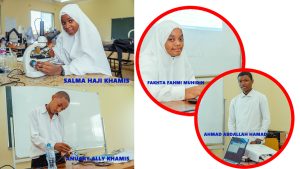
Fakhta Fahmi Muhidin from Utaani Secondary School shared: “I learned how to use computers to create statistical graphs (histograms) and analyze data to predict schistosomiasis trends from 2026 to 2030. This experience has greatly improved my creativity and analytical thinking.”
Similarly, Ahmad Abdallah Hamad from Madungu Secondary School explained that field visits and data integration exercises helped him better understand preventive measures and community responses to schistosomiasis outbreaks.
In the engineering track, student Jamila Suleiman Ali demonstrated how she used controllers, connectors, and waterproof temperature sensors to design a digital body temperature monitoring system using computer programming.
Another student, Anuary Ally Khamis, went further by applying the same sensors to measure average temperatures in water bodies such as rivers and ponds. “I encourage Milele Zanzibar Foundation and Project Inspire to continue organizing more Bootcamps so that more students can gain practical innovation skills to solve community challenges,” Anwar emphasized.
Salma Haji Khamis from Utaani Secondary School highlighted how AI technologies simplified scientific research and investigations. “Instead of spending long hours conducting manual investigations, AI helps me obtain faster and more accurate results, including identifying parasites found in contaminated water,” she explained.
Students from various schools who participated in the STEM Bootcamp in Pemba
Issaya Ipyana Manager at Project Inspire, which partners with Milele Zanzibar Foundation through the “Empowering Health System” project, said the initiative seeks to promote gender equity in STEAM education.
He noted that the program intentionally prioritizes girls’ participation, with approximately 80% female and 20% male student representation, in order to encourage more girls to pursue careers in science, technology, engineering, and mathematics.
“We are equipping students with modern digital tools and exposing them to pathways toward becoming future doctors, engineers, and innovators. At the same time, we are supporting the Government’s Blue Economy agenda through science and technology-driven solutions,” said Isaya.
Supporting Zanzibar’s Educational Transformation
According to Eshe Ramadhani, the Bootcamp initiative aligns with the efforts of the Zanzibar Ministry of Education in implementing the Competence Based Curriculum (CBC).
The program aims to ensure that students graduate with practical competencies required in the global job market, including communication skills, teamwork, confidence, and innovation.
The initiative has also strengthened collaboration between STEAM Innovation Hubs in Unguja and Pemba under the Department of Secondary Education, creating sustainable spaces where students can continue nurturing their talents and creativity.
Advancing Laboratory Science Through Modern Technology
Ceclia Shoni, a science trainer at the Pemba Bootcamp, explained that AI technologies are helping young scientists conduct faster and more accurate disease analysis.
“We trained students to use advanced diagnostic tools, including digital scanner microscopes. These technologies help students generate reliable data and improve the accuracy of scientific investigations,” Cecilia stated.
In Unguja, the Bootcamp brought together 90 students from nine secondary schools: Kibele, Unguja Ukuu, Pete, Kikungwi, Jang’ombe, K. Chekundu, Kiponda, Benbella, and Mpendae.
Meanwhile, in Pemba, the Bootcamp engaged 80 students from four secondary schools: Utaani, Furaha, Madungu, and Hemed.
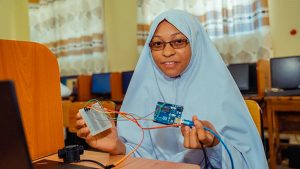
Student Jamila Suleiman Ali during practical training at the Bootcamp.