By Greyson Mgoi
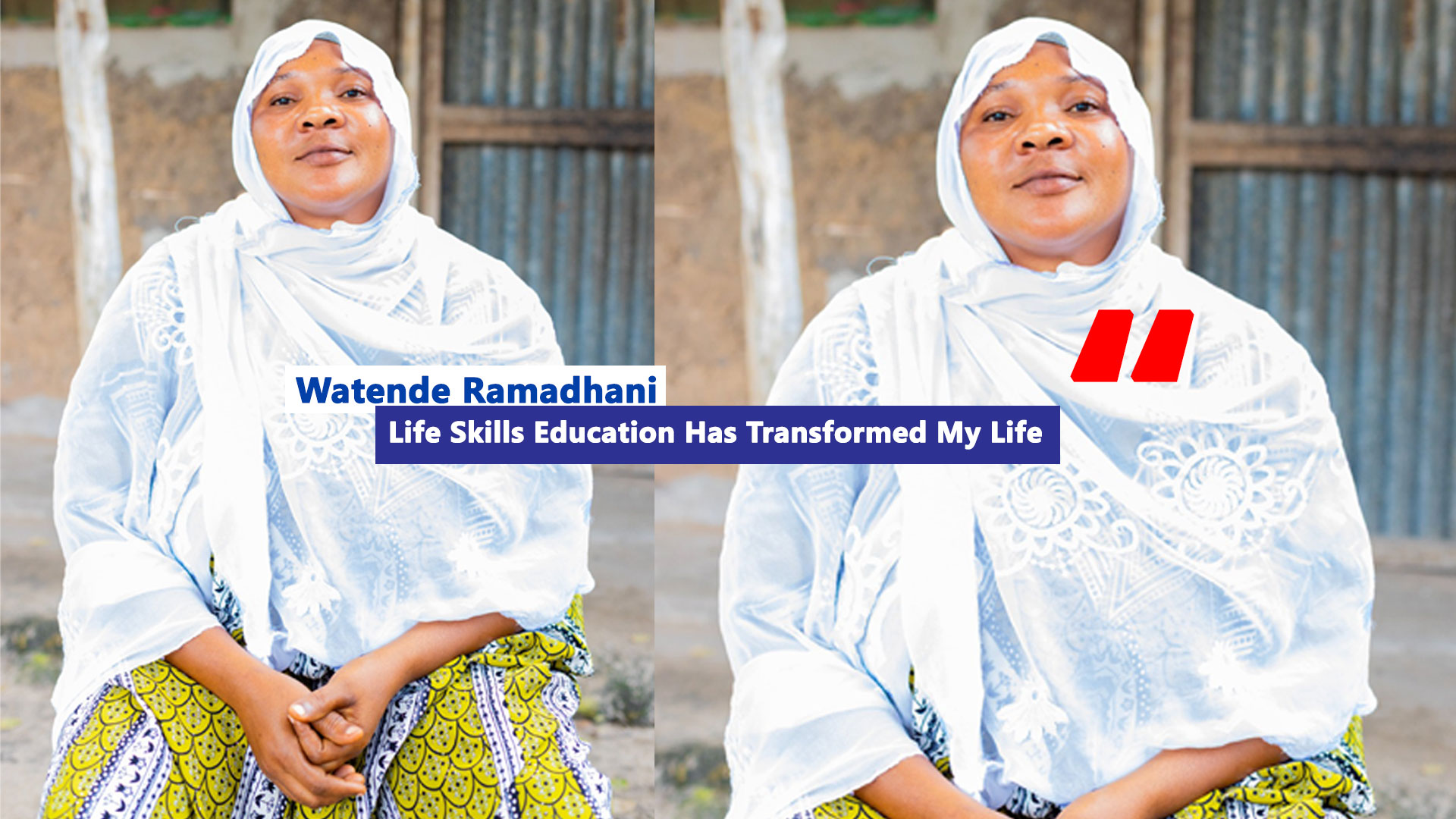
Watende Ramadhani Botea (44), a mother and resident of Makulunge Village, who is also the Chairperson of the School Committee of Migiro Primary School in Makulunge Ward, Bagamoyo District, Coast Region, says that the Life Skills and Values Education training she received from Uwezo Tanzania has significantly transformed her life and helped her raise and nurture her children to grow well while developing important competencies and life skills.
Watende says that before receiving the training, she did not even know what Life Skills meant. However, after receiving training through the Action for Life Skills and Values in East Africa (ALiVE) project, she came to understand that life skills are enabling competencies that help an individual cope with different situations encountered in everyday life.
She says the Life Skills training has helped her improve her understanding of various competencies, including communication, working well with other people in the community, and strengthening her ability to solve problems whenever they arise.
Giving an example of the Problem-Solving skill, she says she has learned that when faced with a problem, it is important to follow the necessary steps to solve it effectively. She says the first important step is to identify and understand the problem itself before beginning to think about different ways of solving it.
She says that after learning and gaining a better understanding of these important competencies, including problem-solving, she has now been able to help her children develop problem-solving skills while also building their confidence and courage. She emphasizes that this skill is very important because it enables children to address various challenges they encounter in life.
“I also had an opportunity to share with other people the Life Skills and Values training I received. I shared what I had learned during village meetings, and, indeed, many parents became interested in this education,” says Watende.
Watende calls on other parents to help their children develop these important skills, noting that life skills are beneficial and play a significant role in promoting proper child upbringing.
Explaining what they were taught about Life Skills and Values, particularly the Problem-Solving skill, she said parents and caregivers were taught to do the following to help children develop problem-solving skills: allow children to solve their own problems; for example, when a child comes with a problem, instead of solving it for them, ask them how they can solve it. Parents should also encourage children to seek more information about the particular problem and encourage them to use the information they have to suggest different ways of solving it. They should further encourage children to identify which approach can solve the problem effectively, try that approach, and, if it does not work, ask themselves why and consider what alternative approach could solve the problem.
Calling on the community and the government, Watende asks that this education be made available to everyone, including both parents and children, saying that it has been a great help to her and to more than 40 other parent champions who received the training in Bagamoyo District and later went on to share the knowledge with other parents.
“My call to the government and society at large is that Life Skills and Values Education is important for everyone. I advise everyone to learn about it and, if possible, all children should be taught this education both at school and at home,” Watende emphasized.
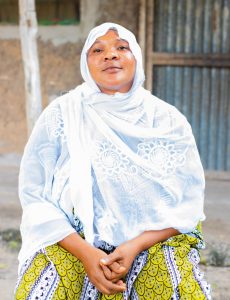
Watende Ramadhani: (ALiVE) project beneficiary
According to the 2025 implementation report of the ten-week Problem-Solving campaign implemented under the Life Skills Project by Uwezo Tanzania, in collaboration with its partner organizations OCODE (Bagamoyo), Milele Zanzibar (Zanzibar), and SAZANI Trust (Zanzibar), the main objective of the campaign was to strengthen the participation of parents and communities in promoting problem-solving and life skills among children and young people through a national ten-week campaign. The campaign also aimed to promote a culture of inquiry, creativity, resilience, and continuous learning.
Alongside the main objective, the specific objectives of the campaign included encouraging parents and communities to promote children’s curiosity and questioning skills in order to develop critical thinking; incorporating practical and age-appropriate activities at school and at home to help children apply problem-solving skills in real-life contexts; and promoting creative thinking through arts, games, and innovation to build children’s confidence and ability to develop alternative solutions.
The report indicates that in Zanzibar, the campaign directly reached 3,144 people, comprising 1,063 men and 2,081 women. It fully involved 949 parents, 1,917 students, 193 teachers, five head teachers, 30 religious leaders, 13 community leaders/champions, five local leaders, and 32 youth volunteers. In addition, another 2,607 parents 1,115 men and 1,492 women were reached indirectly, indicating the strong spread of the campaign’s messages at household level beyond the initial target group.
Moreover, in Bagamoyo, 1,464 parents were educated, along with at least 40 students from Nianjema Primary School, 54 vocational trainees from Baqwina College of Business, 92 members of savings groups, and 239 worshippers in religious institutions. More than 15,000 community members were also reached through radio and television broadcasts and other media platforms.
What Were the Results After the Campaign?
Following implementation of the campaign, behavioural changes observed among parents included better family communication. Parents began involving children in discussions and collaborative decision-making on family matters, while communication between parents and other family members also improved.
Another change observed was the adoption of positive discipline approaches. This involved moving away from harsh disciplinary methods towards positive guidance, creating space for children to ask questions and share their ideas.
Alongside these changes, parents began attending parent-teacher meetings at school more regularly, monitoring their children’s academic progress, and looking for ways to improve their children’s learning outcomes. There was also an improvement in the extent to which parents supported their children in learning at home.
The report also identifies behavioural changes among students following implementation of the campaign. These included increased curiosity and critical thinking among students. Students were observed developing a stronger sense of inquiry and a greater confidence in reading and analysing books both at school and at home. There was also improved school attendance, resulting from reduced absenteeism and lateness, as well as increased ability among some students to express themselves, demonstrate creativity, and solve problems.
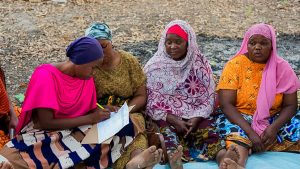
Engagement of parents during the ten-week Problem-Solving campaign
According to Dr. Daniel Marandu, a Psychologist from the University of Dar es Salaam, psychology tells us that when a child is born and begins to grow, they need approaches or knowledge that can help them cope with various challenges.
Dr. Marandu explains that these approaches are what we refer to as life skills. He says children with a high level of life skills have a much greater chance of succeeding in life compared with those who have a lower level of such skills.
Meanwhile, Mwanahamisi Jokolo, an Officer and Curriculum Specialist from the Tanzania Institute of Education, was quoted last year (2025) by Uwezo Tanzania experts who were producing a video on the results of the Life Skills Project. She said that the collaboration between the Tanzania Institute of Education (TIE) and non-governmental organizations is strong and positive and will essentially enable continued joint efforts to promote Life Skills and Values among students. She emphasized that these skills are very important for children.
Through the Life Skills and Values Project, Uwezo Tanzania and its partner organizations have worked closely with the government through the Ministry of Education in both Mainland Tanzania and Zanzibar, the Tanzania Institute of Education (TIE) and other departments to ensure that Life Skills are integrated into the improved curriculum. They have also ensured that teachers receive important training on how to help children develop these skills.
A 2015 report by the Inter-University Council for East Africa shows that many university graduates possess various technical skills but lack the skills that enable them to apply their knowledge effectively in the workplace. The study shows that many employers said university graduates lacked skills such as communication, creativity, self-awareness, problem-solving, and critical thinking, making it difficult for them to secure employment in various positions. Six out of ten graduates, equivalent to 61 percent of university graduates in Tanzania, were found to lack these important skills, contributing to difficulties in securing employment.
These reports demonstrate the importance of parents and teachers in building and developing life skills and values during children’s formative years and at the basic education level-skills that will have significant benefits for society.
A study conducted by the Action for Life Skills and Values in East Africa (ALiVE) Project in 2022 also found that schooling contributes significantly to the development of life skills. Young people in higher levels of education, particularly secondary school, were found to demonstrate higher levels of life skills competencies than those in lower levels of education, particularly primary school.
These studies have contributed to changes in education and encouraged the government to revise the curriculum and prioritize the development of skills and life skills within the education system. This is intended to increase patriotism among young people, strengthen their ability to cope with various challenges using the knowledge they acquire, and, most importantly, contribute to addressing the employment challenge in the country.
Furthermore, due to the significant importance of life skills in building patriotic citizens who are capable of creating employment opportunities and possess the skills required to engage in different forms of work, the government has reviewed its curriculum and made improvements to ensure that life skills are given priority in the improved curriculum.
The improved curriculum, which began to be implemented in January 2024, has prioritized five life skills that have been integrated into different subjects in order to promote their development. These skills include critical thinking, problem-solving, communication, and collaboration.
With these improvements, education will build learners who are capable of applying what they learn in different subjects to address various situations in life, such as building better relationships with others in society, dealing with challenges such as unemployment, and working together with people from different communities to promote economic development and peace in the communities where they live.
The questions to ask are: What are you, as a parent, doing to help your child develop these important life skills? What have you learned from this article? Share your views through the address of the Editor of this newspaper.