By Hamad Rashid
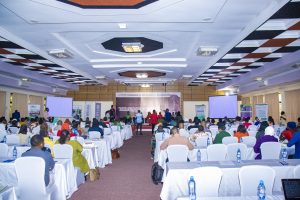
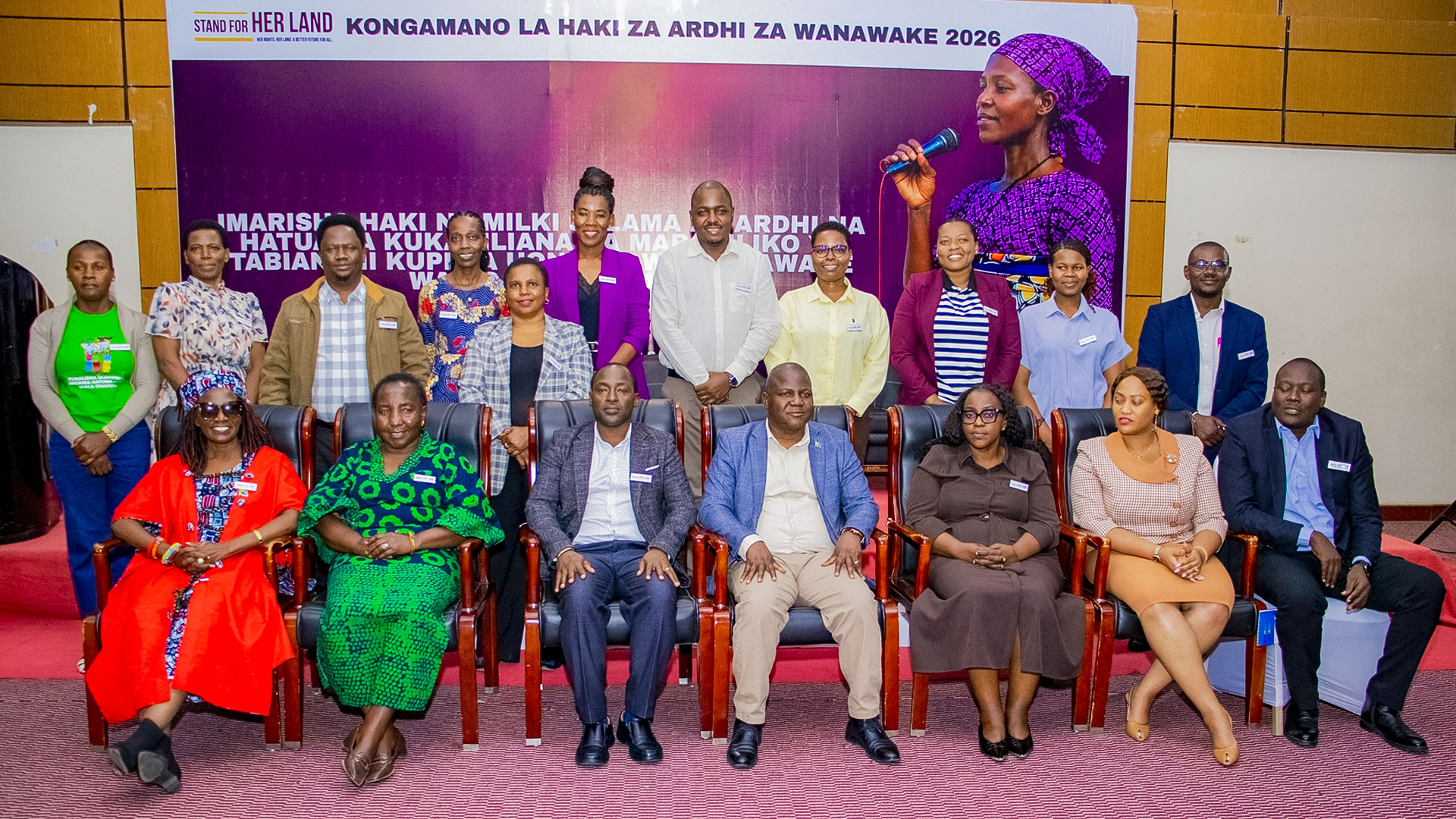
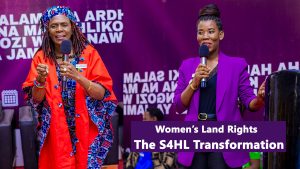
Seven years after the launch of the Stand for Her Land (S4HL) Campaign, known in Tanzania as the “Linda Ardhi ya Mwanamke” (Stand for Her Land) Campaign, approximately 200 women from different parts of the country gathered in Dodoma for the 2026 Women’s Land Rights Conference to discuss achievements, challenges and the next steps in efforts to ensure that women can access, own and protect their land rights.
Held over two days in Dodoma (August 12–13, 2026), the conference brought together grassroots women, civil society organisations, policymakers and other stakeholders working on land rights issues.
Key issues discussed during the conference included the growing number of women holding land titles, women’s participation in decision-making structures, economic empowerment, the impact of discriminatory cultural practices, and the role of policies and laws in protecting women’s land rights.
38% of Women Hold Land Titles
Opening the conference, the Deputy Minister for Lands, Housing and Human Settlements Development, Kaspar Mmuya, presented statistics showing that 38% of women in Tanzania now own land through formal titles.
The figure comes at a time when women’s rights to own and use land have increasingly become an important part of discussions on gender equality, economic empowerment and community development.
The Executive Director of the Tanzania Women Lawyers Association (TAWLA) and Chairperson of S4HL, Bitike Mwambipile, said the development reflects ongoing efforts to strengthen the implementation of laws that recognise equality between women and men in land rights.
For many years, women have faced challenges arising from cultural practices, traditions and social systems that have affected their ability to inherit, own and make decisions over land.
S4HL and Rights Awareness at the Grassroots Level
The First Coordinator of the Stand for Her Land Campaign, Dr. Monica Mhoja, said the campaign has played a role in strengthening women’s awareness of their land rights through education and the establishment of community champions.
Speaking at the conference, Dr. Mhoja said, “The Stand for Her Land Campaign has made a significant contribution towards reaching that 38% level of women’s land ownership in the country because member organisations have provided education and developed champions who have been able to support other people in rural areas.”
She said the champions have continued to provide education and support communities in understanding and claiming land rights despite the challenges they face.
Four Strategic Areas of S4HL
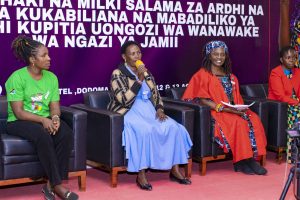
The Director of Landesa Tanzania, Godfrey Massay, said that since the campaign was launched in 2019, its work has focused on four major strategic areas: challenging discriminatory cultural practices, economically empowering women, increasing women’s participation in decision-making structures, and protecting women in large-scale land investments.
“Challenging discriminatory cultural practices by addressing traditions that deny women the right to inherit or own land; economic empowerment by building women’s financial capacity so that they can purchase and develop land; decision-making structures by ensuring that women’s voices are heard at the tables where land-related decisions are made; and protection in investment by ensuring that large-scale land investments in the country do not oppress women or leave them without homes,” said Massay.
Bridging the Gap Between the Law and the Reality of Rural Women
The representative of WeEffect Tanzania, Frank Ademba, said one of the key objectives of stakeholders and organisations participating in the Stand for Her Land Campaign is to reduce the gap between rights recognised in laws and the realities faced by women in communities.
“The main objective of stakeholders and members of the Stand for Her Land Campaign is to bridge the gap between what is stated in laws and policies and what is happening to women in rural areas.”
The statement was reflected in testimonies from women attending the conference, who described how land rights education had helped them understand their rights and take steps to protect them.
Women Share Stories of Change in Their Communities
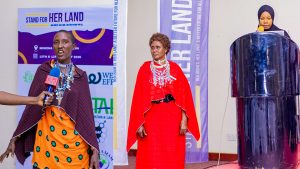
Mamayana Willium, a beneficiary of the S4HL Campaign from the Maasai community, said that before receiving education on women’s rights, women in her community had limited opportunities to participate in decision-making.
“Previously, the Maasai community was very far behind, and women had no say in front of men. But now we know our rights and our land is no longer taken away from us,” said Mamayana.
She added that increased awareness has also encouraged women to stand up and support other women facing challenges.
“Women have decided to stand firmly and defend their fellow women who are being abused or subjected to economic violence,” she said.
Meanwhile, Clara Malle, a resident of Babati District in Manyara Region, said the education she received has enabled her to reach and educate more women in her community.
“Through the education that has been provided, some men have started allowing women to participate in decision-making and to become economically empowered through property ownership, I have also been at the forefront of educating many women in Babati District.”
Policy and Legal Influence Over Seven Years of S4HL
The Coordinator of the Stand for Her Land Campaign, Khadija Mrisho, said that over the past seven years, the campaign has also been involved in policy processes and discussions addressing women’s land rights.
According to Mrisho, campaign stakeholders have participated in the review processes of the 1995 National Land Policy, including the 2023 review, which incorporated provisions addressing gender-related issues.
She said the campaign has also engaged in discussions on the Gender Policy, Youth Strategy, investment guidelines and climate change issues, reflecting the links between land, gender equality, economic empowerment and environmental sustainability.
This engagement has positioned the Stand for Her Land Campaign within broader policy discussions on how laws and legal frameworks can strengthen women’s rights to own and use land.
Government Recognises Stakeholders’ Contribution
Closing the 2026 Women’s Land Rights Conference, Minister for Information and Communication Technology, Angellah Kairuki, commended members of the Stand for Her Land Campaign for their efforts to advance land rights, particularly at the grassroots level.
Kairuki said the campaign has contributed to policy discussions on women’s rights and enhanced Tanzania’s recognition in the broader land rights agenda.
She also thanked Landesa and other stakeholders for their contribution to the development of a national programme for an equitable generation, particularly in advancing economic rights and equality for women, youth and men.
Five Pillars for the Next Phase
The Women’s Land Rights Conference, held under the theme “Advancing Secure Land Rights and Climate Action Through Grassroots Women’s Leadership,” adopted five pillars as implementation priorities for members, stakeholders, government and communities.
The five pillars are:
Accelerating legal and administrative reforms related to land matters;
Expanding inclusive joint land-use planning that takes gender considerations into account;
Linking financing for climate action, agroecology and water resource management;
Promoting youth leadership and seed ownership and stewardship; and
Strengthening multi-stakeholder platforms and promoting shared governance in natural resource management.
The pillars were identified as areas through which stakeholders can continue strengthening women’s leadership, secure land rights and climate action at community and national levels.